

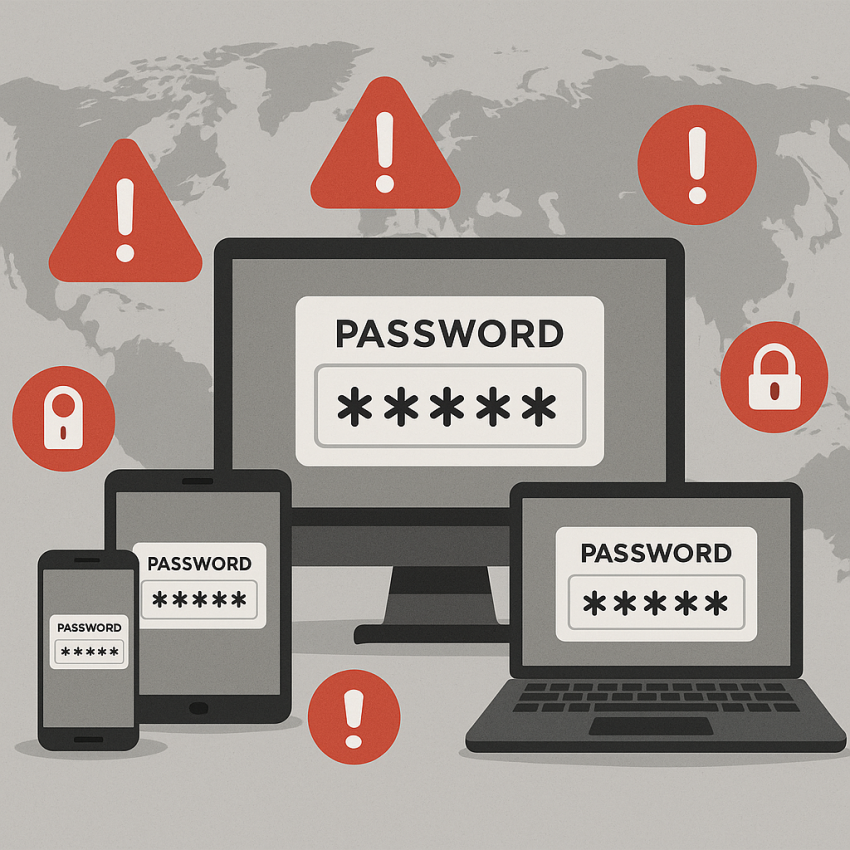

Why Reused Passwords Are the Biggest Security Risk
Why reused passwords are the biggest security risk. In this article we explain how password reuse creates a single point of failure across sites and what you can do to reduce exposure across services and devices.
TL;DR
- Reusing passwords multiplies risk: a breach on one site can compromise many others.
- Always use unique passwords per site and enable two-factor authentication (2FA) where possible.
- A password manager makes strong, unique passwords practical and memorable.
Why reuse is a risk
When a password is used across multiple services, a breach on even one platform may expose credentials on others. Why reused passwords are the biggest security risk stems from attackers trying the same credentials on Gmail, social networks, banking apps, and more. If you reuse passwords, an attacker who learns one password can move laterally across your accounts with ease.
How to reduce the risk
- Use unique passwords for every site: craft a distinct credential for each account, even for minor services.
- Leverage a password manager: generate, store, and auto-fill long, random passwords. This is the most practical way to avoid repetition.
- Enable two-factor authentication (2FA): adds a second barrier, so even compromised passwords are less useful.
- Audit your accounts: periodically check for breaches and update compromised passwords promptly.
- Adopt passphrases the easier to remember, the harder to crack, when combined with length and variety.
Quick comparison
| Strategy | Risk | Best practice |
|---|---|---|
| Reuse passwords | High | Unique per site |
| Strong unique passwords | Low | Use a password manager |
| Two-factor authentication | Medium | Enable 2FA everywhere |
Safe and legal use
Use password tools responsibly and respect terms of service. For security guidance, refer to official resources like Google Security and reputable security references on Wikipedia.
FAQ
What is password reuse?
Using the same password for multiple sites or services.
Why is password reuse dangerous?
Breaches on one site can expose credentials on other sites, allowing attackers to access more accounts.
How can I tell if my password was compromised?
Look for breach notices and use trusted checks like HaveIBeenPwned, but never share passwords in replies.
Should I use a password manager?
Yes. It helps generate and store unique passwords securely across sites.
Are password managers safe?
They are safe when protected by a strong master password and 2FA, and when you choose a reputable tool.
How do I create strong unique passwords?
Use long passphrases with mixed case, numbers, and symbols; aim for 14+ characters per password.