

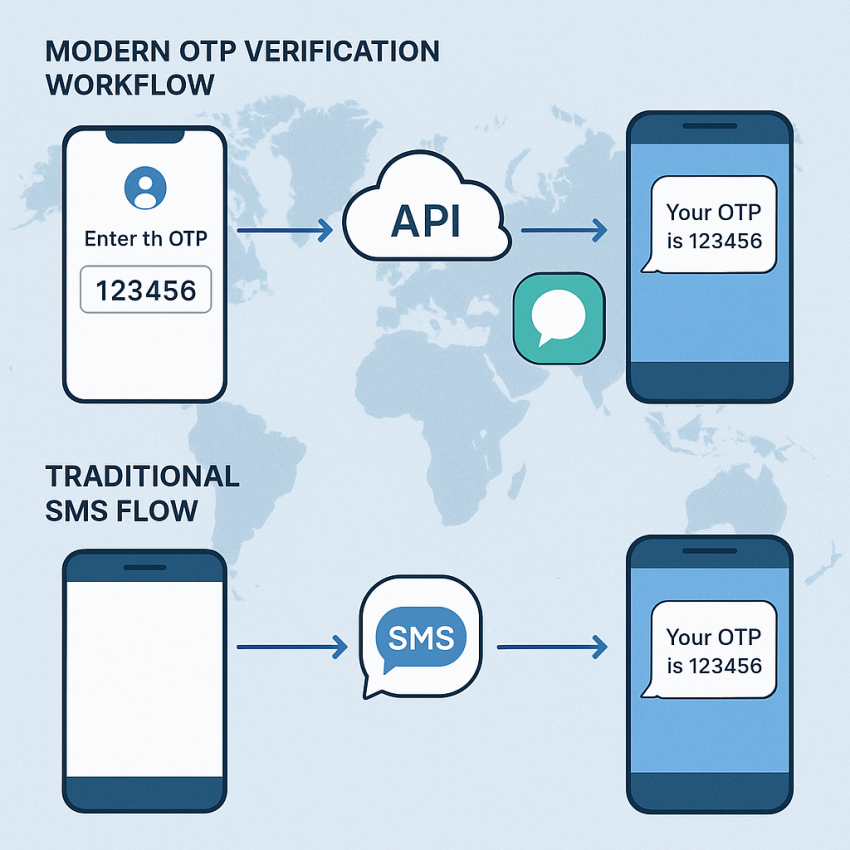

Modern alternatives to traditional SMS verification providers
Modern alternatives to traditional SMS verification providers offer privacy-friendly and scalable options for onboarding users worldwide. In this guide, we explore practical approaches, from API-based OTP delivery to verification through messaging apps, helping you choose safer and faster methods without over-relying on SIM-based SMS.
TL;DR
- Modern verification often relies on APIs, messaging apps, or voice alternatives to SMS.
- Look for security features like end-to-end encryption, secure storage, and audit trails.
- Choose solutions that fit your region, scale, and compliance needs.
Why use modern alternatives
Traditional SMS verification can be slow or vulnerable to SIM-swaps and interception. Modern alternatives reduce dependency on mobile networks, improve speed, and often enhance user privacy by avoiding plain SMS delivery for sensitive verifications. Providers frequently offer robust APIs, global reach, and better analytics for deliverability and security. For example, many platforms integrate with apps like WhatsApp or other messaging services for verification, see WhatsApp as an alternative channel when appropriate. For security best practices, you can review Google’s safety guidelines at safety.google and general verification concepts on Wikipedia.
How to adopt modern alternatives
- Assess your needs: number of verifications per month, target regions, and latency requirements.
- Evaluate types of verification: OTP via messaging apps, voice-based verifications, or device-bound checks.
- Check security and compliance: look for encryption, access controls, and data retention policies.
- Test integrations: use sandbox/test credentials and monitor delivery success and fallback options.
- Monitor performance: track OTP delivery times, retry rates, and fraud signals.
Comparison: delivery, cost, and compatibility
| Aspect | Traditional SMS | Modern alternatives | Use cases |
|---|---|---|---|
| Delivery speed | Often moderate; depends on carrier | Typically fast via APIs or messaging apps | New account onboarding, high-volume verifications |
| Privacy | Potential SIM swap risk | Reduced exposure; possible encryption options | Financial, enterprise, or privacy-sensitive apps |
| Cost | Per-message fees may apply | Usage-based with API access; tiered pricing | Scale-up experiments and growth |
Safe and legal use
Always comply with local regulations and the terms of service of your verification provider. Use consent-based verification and avoid harvesting numbers or sending unsolicited codes. Keep audit trails for compliance and support needs. For reference, see general privacy guidelines on Wikipedia and security best practices from Google Safety.
FAQ
1. What are modern alternatives to traditional SMS verification providers?
They include API-based OTP delivery, verification through messaging apps, voice-based verification, and device-bound checks that reduce reliance on SMS.
2. Are these methods secure?
Yes, when implemented with encryption, secure authentication flows, and proper access controls. Always review the provider’s security documentation.
3. How do I choose a provider?
Consider regional support, latency, API quality, privacy features, and compliance with local laws.
4. Do these methods support international numbers?
Many do, but coverage and performance vary by country. Verify regional availability before committing.
5. What about costs?
Costs differ by usage, volume, and channel. Compare per-verification fees and monthly minimums across vendors.
6. How can I test a new solution?
Use sandbox environments, set up test numbers, and evaluate deliverability, latency, and error handling.
7. Are there legal considerations?
Yes—ensure compliance with data protection laws and the provider’s terms. Obtain user consent where required and implement fraud controls.