

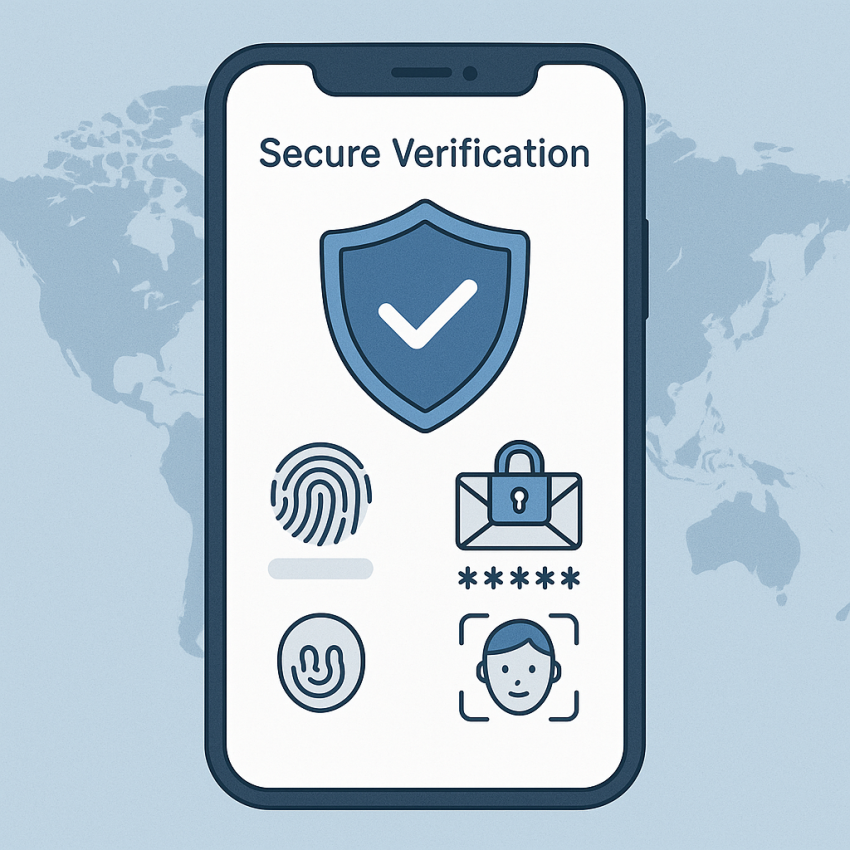

Why switching from legacy SMS services improves account security
Why switching from legacy SMS services improves account security is a critical topic for any online service. As attackers evolve, legacy SMS authentication becomes more vulnerable, while modern verification methods offer stronger protections for user accounts.
- Legacy SMS can be attacked through SIM swapping, SS7 exploits, and SIM hijacking.
- Modern verification options reduce risk by using app-based codes, push notifications, or offline verification.
- Switching is about better UX, stronger encryption, and easier incident response.
Why use modern SMS verification services
Modern SMS verification services reduce common attack vectors and improve overall account security. By migrating away from legacy SMS, you reduce reliance on fragile telecom routing, minimize SIM swap impact, and gain better visibility into verification events. For practical guidance and secure options, you can explore trusted providers like WhatsApp for app-based verification and stay informed through Safety by Google.
Using a dedicated verification provider also helps enforce privacy controls, audit logs, and stricter authentication policies. If you’re evaluating a switch, consider how the provider handles data, incident response, and integration options with your existing services. For a broader overview of secure verification, see Two-factor authentication on Wikipedia.
How to switch from legacy SMS services
- Audit current accounts using SMS-based verification and identify critical services.
- Choose a modern verification method (app-based codes, push notifications, or voice alternatives).
- Plan a phased rollout to minimize user disruption and ensure backup methods exist.
- Integrate with a trusted SMS/verification provider and test integration in a staging environment.
- Update recovery options and educate users about new verification steps.
- Monitor for anomalies and enable alerts for suspicious verification attempts.
- Decommission legacy SMS workflows only after confirming all accounts are migrated.
Table: legacy SMS vs modern verification
| Aspect | Legacy SMS | Modern verification |
|---|---|---|
| Security risk | High risk due to SIM swapping and SS7 flaws | Lower risk with app-based codes, push, or offline verification |
| Delivery reliability | Dependent on telecom networks; possible delays | Often faster; uses device/app auth |
| User experience | Frustrating if SIM changes occur | Smoother with seamless MFA prompts |
| Auditability | Limited visibility | Detailed logs and controls |
| Privacy controls | Limited access to verification data | Stricter data handling and scopes |
Safe and legal use
Always ensure compliance with local laws and platform policies when deploying verification solutions. Use reputable providers, obtain user consent, and implement privacy-by-design practices. Do not rely on verification channels that you do not control, and provide clear support channels for users who experience issues with verification codes. For general security principles, refer to W3C Security guidelines.
FAQ
Q1: What are legacy SMS services?
Legacy SMS services rely on traditional SMS to deliver one-time codes for verification, which can be vulnerable to SIM swaps and carrier-based exploits.
Q2: How can switching improve account security?
Switching to modern verification reduces exposure to SIM-based attacks, improves control over authentication data, and provides stronger incident response capabilities.
Q3: Are modern SMS verification providers safe?
Yes, when choosing reputable providers with strong privacy practices, robust logging, and incident response, modern methods can be safer than legacy SMS.
Q4: Do I need to change all accounts at once?
Not necessarily. Use a phased approach, prioritize high-risk accounts, and provide users with clear migration steps.
Q5: Could there be privacy concerns?
Any verification service handles personal data. Review the provider’s data policy, retention periods, and data transfer safeguards before adoption.
Q6: How do I integrate with existing apps?
Work with the provider’s API, follow their integration guides, and test thoroughly in a staging environment before going live.
Ready to upgrade your verification? Explore secure options with SMSPVA:
Rent virtual phone numbers Free phone numbers